
Federal Immigration Release Paths
This fallback is not a physical Waterbury jail. It routes a search when the known facts point beyond city police, Waterbury court, and CT DOC. A federally sentenced person is tracked through the Bureau of Prisons. A federal pretrial detainee may instead be held for the U.S. Marshals Service at a contracted or designated facility and may not appear like a sentenced BOP prisoner.
Immigration custody follows a different path. A person can be released from Waterbury Police or CT DOC and then transferred to ICE under a detainer or other authority. That is a criminal-custody release followed by continued immigration detention, not community release. ICE may also release someone after immigration bond or court action. Confirm the exact agency, facility, and event before describing the outcome.
Confirm Federal Immigration Release
Choose the locator based on custody, not residence or arrest city. BOP covers federal incarceration records within its stated date range. ICE ODLS covers immigration detention searches. CT DOC remains the correct source when a Waterbury case stayed in Connecticut state custody.
- Check the case source. A federal criminal docket points toward BOP or the Marshals Service; an immigration notice points toward ICE.
- For a sentenced federal prisoner, search the BOP Inmate Locator by register number or identifying information.
- Read the BOP facility and release-date result together. A past date with no listed facility supports that BOP custody ended on that date.
- For suspected immigration detention, use ICE ODLS and note the detention facility named in the result.
- Contact the named facility, counsel, or court for the action that caused release or transfer. Use agency FOIA when a detailed custody history is needed.
- Check CT DOC or Waterbury records separately if the timeline began with a local or state arrest.
The Waterbury County released inmates search helps establish whether this federal fallback is needed. A no-result from one locator never proves release from all custody.
Note: Federal release can still lead to supervised release or another agency's custody, so confirm the destination as well as the date.
Federal Immigration Records Contacts
Because no single Waterbury facility controls these records, the useful contact is the agency locator and the facility identified by it. BOP can lead to the federal prison record. ICE ODLS can lead to the immigration detention site. The Marshals Service or federal court may be necessary for pretrial federal custody.
Official federal custody routes
BOP Inmate Locator: www.bop.gov/inmateloc/
ICE Online Detainee Locator: locator.ice.gov/odls/
ICE Detention Facility Directory: www.ice.gov/detention-facilities
Detailed records: BOP FOIA or ICE/DHS FOIA, as applicable
For a detailed request, provide the person's full name, agency number such as a BOP register number or A-number when known, date of birth, facility, and date range. Ask for records sufficient to show admission, transfer, release date, release status, and facility movement within that agency's custody. A Waterbury city request cannot produce ICE history unless the city created a local transfer or detainer-related record.
Federal court records can supply the sentence or release order in a criminal case, just as immigration court or agency papers may supply the legal basis in an ICE matter. Those legal records should be paired with the custodian's record. A court can authorize release, but the facility record is needed to show when processing and physical transfer occurred.
Do not send immigration requests to CT DOC merely because state custody occurred first. Ask each agency for its own segment of the timeline, then compare the handoff dates.
BOP Release Record Meaning
The BOP Inmate Locator is the official first check for a sentenced federal prisoner. BOP states that its locator covers federal inmates incarcerated from 1982 to the present. Its result can show a release date and whether a facility remains listed.
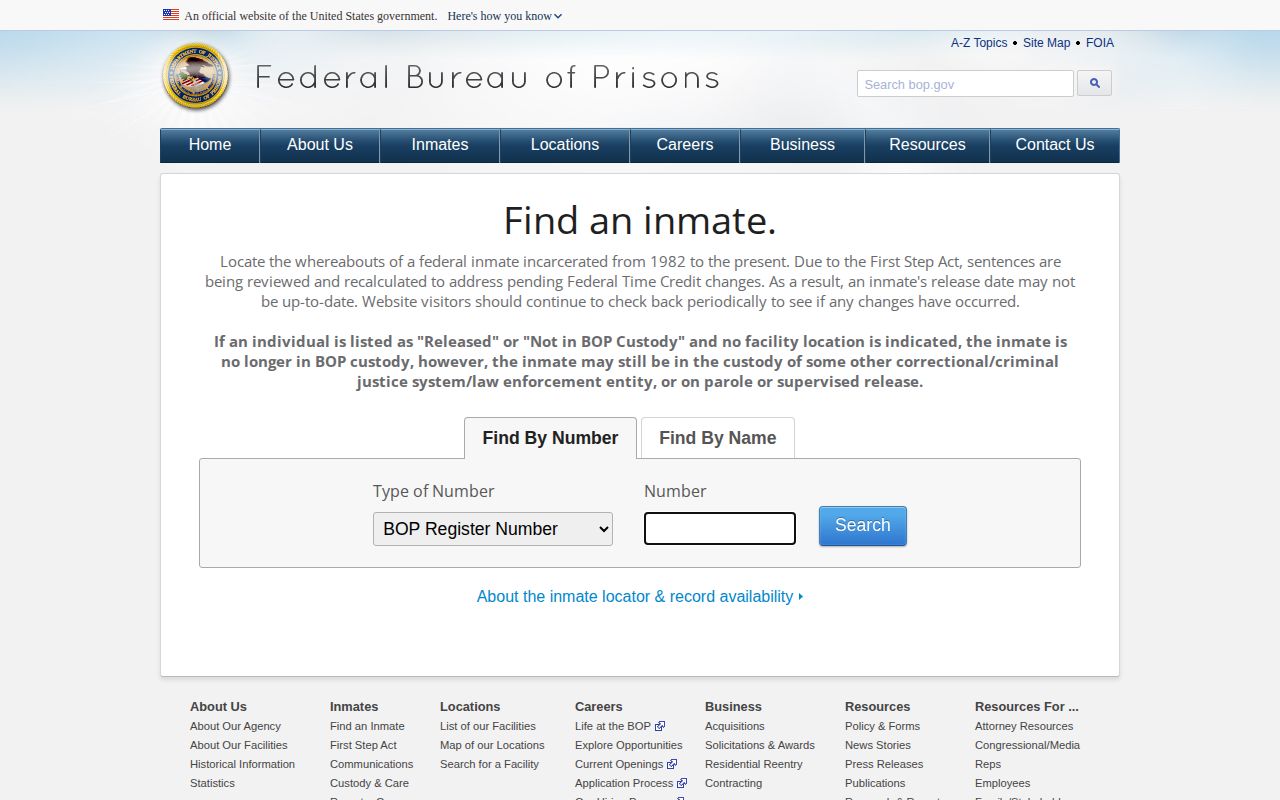
The locator screen supports a federal check but does not prove release from state, local, or immigration custody. BOP explains that a past release date with no facility shown means the person left BOP custody on that date, though another system or supervision status may still apply.
| BOP result | Careful reading |
|---|---|
| Facility listed | The record points to current BOP placement shown by the locator |
| Past release date, no facility | BOP says release from BOP custody occurred on that date |
| No result | Does not prove release; check spelling, number, pretrial status, or another system |
| Future date | A federal date that may be recalculated, not a guaranteed exit |
ICE Release Locator Limits
ICE Online Detainee Locator System is the official online check when immigration detention is suspected. Search requirements differ from BOP, and an A-number can be important. If ODLS names a detention facility, use that facility and counsel to confirm current custody or release procedures. Immigration court records may explain a bond or legal action, while ICE records show agency custody.
The ICE detention facility directory supplies official facility contacts after the locator identifies where a person is held.
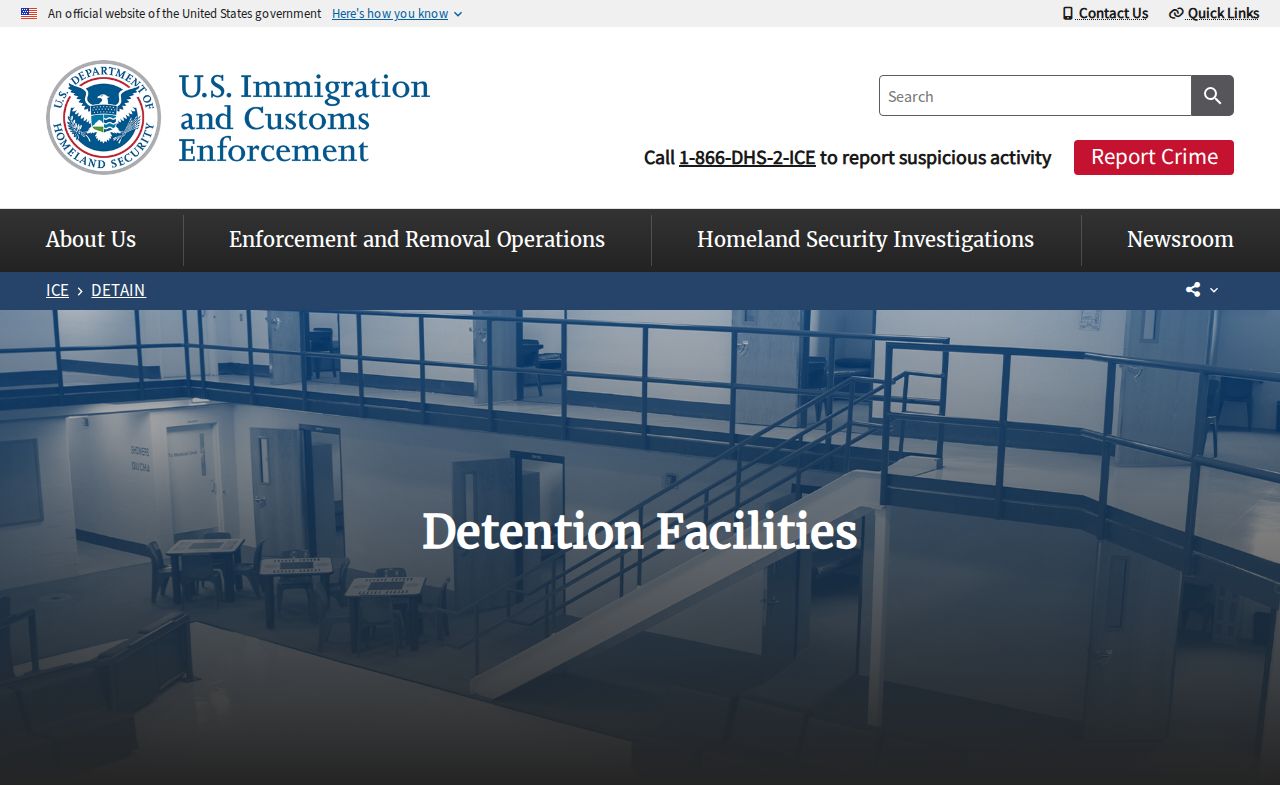
The directory is a nationwide source, not proof that ICE operates a jail in Waterbury. Contact only the facility tied to the person's actual result or case information.
ODLS is a custody locator, not a complete release archive. A no-result may require contact with counsel, the facility, immigration court, or ICE, especially when processing is recent. A DHS or ICE FOIA request is the records route for detailed agency history, subject to federal law and access limits.
An ICE release can carry reporting, monitoring, bond, or court obligations even when physical detention ends. Those conditions differ from Connecticut parole and from federal supervised release in a criminal case. Use the governing immigration paperwork to identify what follows. Do not translate an ICE status into CT DOC terms or assume state supervision applies.
Waterbury Release With Detainer
A detainer is a notice or request tied to another authority's interest in a person. CT DOC's public information may include a detainer notation when applicable. If state custody ends while another valid authority is ready to receive the person, the physical handoff is not release to the community.
Trace the event in order. Obtain the Waterbury police or court record for the local case. Use CT DOC movement and discharge records for the state portion. Then use BOP, the Marshals Service, or ICE sources for the next custody period. The state discharge date and federal intake date may describe one continuous custodial sequence.
Do not infer immigration status from a detainer label alone. Request the actual agency record or confirm through counsel. Likewise, do not assume BOP holds every federal detainee. Pretrial Marshals custody can use facilities outside the sentenced BOP route.
U.S. Marshals custody can be hard to trace through the BOP locator alone. A federal pretrial defendant may move for court appearances or remain at a facility holding people for the Marshals Service. The federal docket, counsel, the named detention facility, and an appropriate federal records request are better routes. A lack of a sentenced BOP result is expected in some pretrial situations.
Waterbury Federal Release Difference
Waterbury's ordinary custody structure is municipal police, state court, and CT DOC. The federal fallback applies only when case facts support a federal criminal or immigration path. There is no Waterbury county sheriff system and no shared recent-release feed that merges all agencies.
- Federal criminal release
- The end of BOP or Marshals custody, possibly followed by supervised release or another hold.
- Immigration release
- The end of ICE detention under immigration authority, which is separate from a criminal case.
- State discharge
- The end or change of CT DOC custody, which may lead to another authority.
- Community release
- A verified exit from physical custody, with any supervision status checked separately.
These terms should not be collapsed into “released.” State, federal, and immigration records can each be accurate while describing different steps. Build the timeline from dated official records and confirm which agency had physical custody after each handoff.
Older federal records have their own coverage boundary. BOP says the public locator covers people incarcerated from 1982 to the present. A search involving earlier custody or more detailed historical material may require records procedures beyond the locator. Keep that limitation separate from current Waterbury and CT DOC systems.
Note: Use BOP and ICE only for their own systems; neither locator replaces Waterbury Police, Connecticut court, or CT DOC records.